Key takeaways
- Whisking eggs and sugar creates the shiny, crackly top.
- A low flour ratio keeps brownies fudgy rather than cakey.
- Underbake slightly and cool completely for clean slices.
- One saucepan means less washing up.
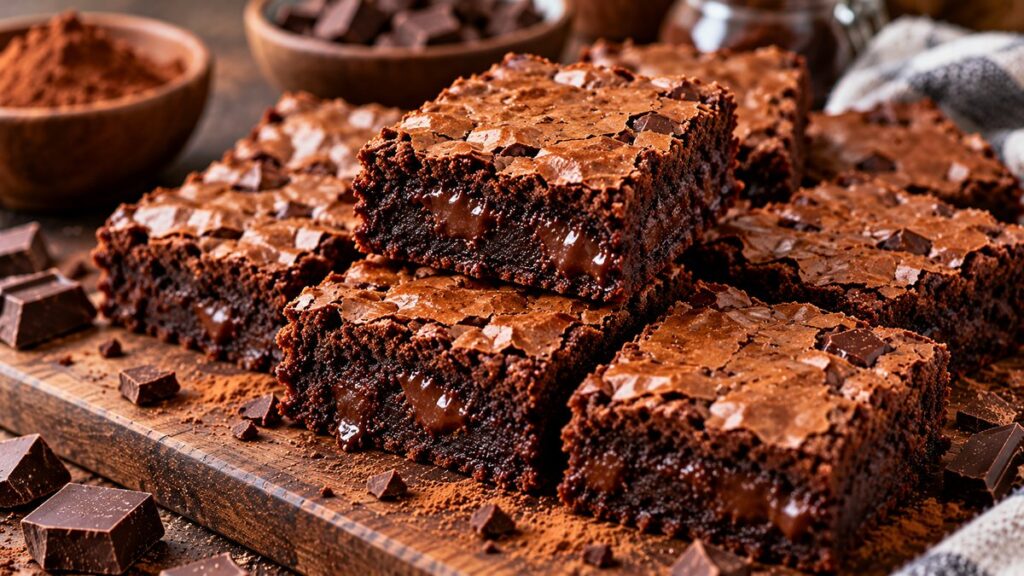
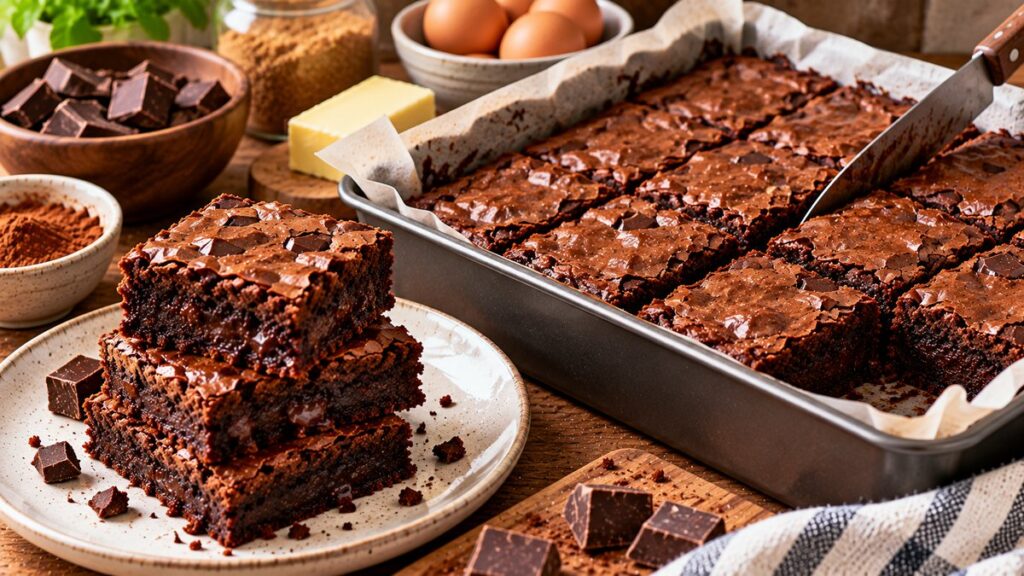
Brownies divide people into two camps: cakey and fudgy. This recipe is firmly in the fudgy camp. It uses cocoa powder, which most kitchens already have, and a short list of ingredients mixed in a single saucepan. The result is dense, rich and chocolatey with a thin, shiny crust that crackles when you bite into it.
What makes brownies fudgy instead of cakey?
The balance between fat, sugar and flour decides the texture. Fudgy brownies have a high proportion of fat and sugar and relatively little flour, and they contain no extra leavening beyond a pinch. Beating less air into the batter also keeps the crumb dense. Cakey brownies use more flour and leavening, and sometimes more whipped eggs. If you prefer cakey, add a spoonful or two more flour and increase the baking powder slightly.
How do you get the shiny, crackly top?
That thin crust comes from dissolving sugar into the eggs. Whisk the eggs and sugar vigorously for a full minute after adding them to the warm butter mixture. The sugar partly dissolves and rises to the top during baking, forming a delicate meringue-like layer. Using eggs at room temperature and warm melted butter helps the sugar dissolve.
Which ingredients matter most?
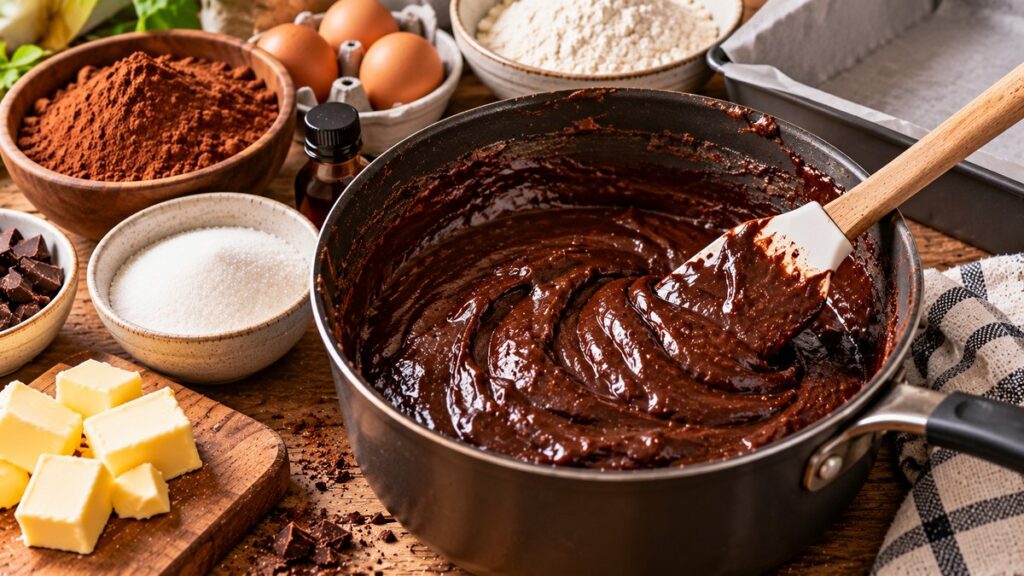
- Cocoa powder: choose unsweetened cocoa. Dutch-processed cocoa gives a darker, smoother flavour, and natural cocoa tastes slightly fruitier.
- Butter: unsalted is best. If you use salted butter, reduce the added salt.
- Sugar: white sugar gives a crisp top. Replacing a third with brown sugar adds chewiness and depth.
- Chocolate: chips or chopped bars add melted pockets and extra richness.
Fudgy Brownies from Scratch
Rich cocoa brownies with a crackly top and dense fudgy centre, made in one saucepan.
Ingredients
- 115 g (1/2 cup) unsalted butter
- 200 g (1 cup) granulated sugar
- 2 large eggs, at room temperature
- 1 teaspoon vanilla extract
- 35 g (1/3 cup) unsweetened cocoa powder
- 65 g (1/2 cup) all-purpose flour
- 1/4 teaspoon baking powder
- 1/4 teaspoon salt
- 100 g (1/2 cup) chocolate chips or chopped chocolate
Instructions
- Heat the oven to 175°C (350°F). Line a 20 cm (8 inch) square pan with baking paper, leaving an overhang on two sides.
- Melt the butter in a medium saucepan over low heat. Remove from the heat and stir in the sugar until combined.
- Beat in the eggs one at a time, then add the vanilla. Whisk vigorously for about 1 minute until the mixture looks glossy and slightly thick.
- Sift in the cocoa, flour, baking powder and salt. Fold gently until no dry streaks remain. Stir in the chocolate.
- Spread the batter in the pan and smooth the top.
- Bake for 22 to 28 minutes, until the edges are set and a toothpick in the centre comes out with a few moist crumbs, not wet batter.
- Cool completely in the pan, ideally for 30 minutes or more, then lift out and cut into squares.
How do you know when brownies are done?
Doneness is easy to miss because brownies firm up as they cool. The edges should look set and slightly pulled from the pan, while the centre should look just barely set. A toothpick should show moist crumbs. If it comes out clean, the brownies may be overbaked and drier. Because pans differ, begin checking at 22 minutes. Dark metal pans bake faster than glass or light aluminium.
How can you customise these brownies?
- Nuts: add 60 g of chopped walnuts or pecans.
- Peanut butter swirl: dollop two tablespoons of peanut butter on top and swirl with a knife.
- Espresso: add a teaspoon of instant coffee to the cocoa to deepen the chocolate flavour.
- Flaky salt: sprinkle a few flakes over the top before baking.
- Mint or orange: add a small amount of extract or zest for a flavour twist.
How should you cut and store them?
Lift the cooled brownies out using the baking paper and slice with a sharp knife, wiping the blade between cuts. Store in an airtight container at room temperature for up to four days, or refrigerate for up to a week for an even denser, fudgier bite. Wrap individual squares and freeze for up to three months.
What mistakes should you avoid?
- Overbaking, which dries the centre.
- Overmixing after adding flour, which makes the texture tougher.
- Cutting while still warm, which creates messy edges.
- Using a pan much larger than the recipe suggests, which gives thin, dry brownies.
Frequently asked questions
Can I use oil instead of butter?
Yes. Oil makes brownies slightly softer and moist, although you lose some of the buttery flavour.
Why is my brownie top not shiny?
The eggs and sugar may not have been whisked long enough or the batter was too cool. Whisk for a full minute while the mixture is warm.
Can I double the recipe?
Yes. Use a 23 x 33 cm (9 x 13 inch) pan and bake for a similar time, checking a few minutes early.
Do I need to sift the cocoa?
Sifting helps prevent bitter lumps. If you do not have a sieve, whisk the dry ingredients together well first.
Bottom line
Brownies are simple when you respect a few basics: whisk the eggs and sugar well, keep the flour low, underbake slightly and be patient while they cool. The reward is a pan of rich, fudgy squares with a glossy top.