Key takeaways
- Focus on flexible ingredients that work in many dishes.
- Build the pantry gradually rather than buying everything at once.
- Store food properly and rotate stock to reduce waste.
- A few flavour boosters turn simple meals into satisfying ones.
A thoughtful pantry makes spontaneous meals easier. When you have the right staples on hand, you can put together dinner without a shopping trip, adapt recipes when an ingredient is missing and cook more confidently. The goal is not a huge collection of unusual products. It is a small, well-chosen supply of flexible ingredients that can move between breakfast, lunch, dinner, snacks and baking.
What are the essential pantry staples?
Begin with ingredients that appear in many recipes. Here is a practical checklist you can adapt to your tastes and cuisine.
| Category | Essentials |
|---|---|
| Grains and starches | Rice, pasta, oats, flour, couscous or bulgur, bread or flatbreads |
| Canned and jarred | Crushed tomatoes, chickpeas, beans, coconut milk, tuna, tomato paste |
| Oils and vinegars | Olive oil, neutral cooking oil, white or apple cider vinegar |
| Sweeteners and baking | Sugar, brown sugar, honey, baking powder, baking soda, vanilla, cocoa |
| Dried legumes | Lentils, split peas, dried beans |
| Nuts and seeds | Almonds, peanuts, sesame seeds |
| Flavour boosters | Soy sauce, stock cubes, mustard, hot sauce, chilli flakes |
Which spices should you keep?
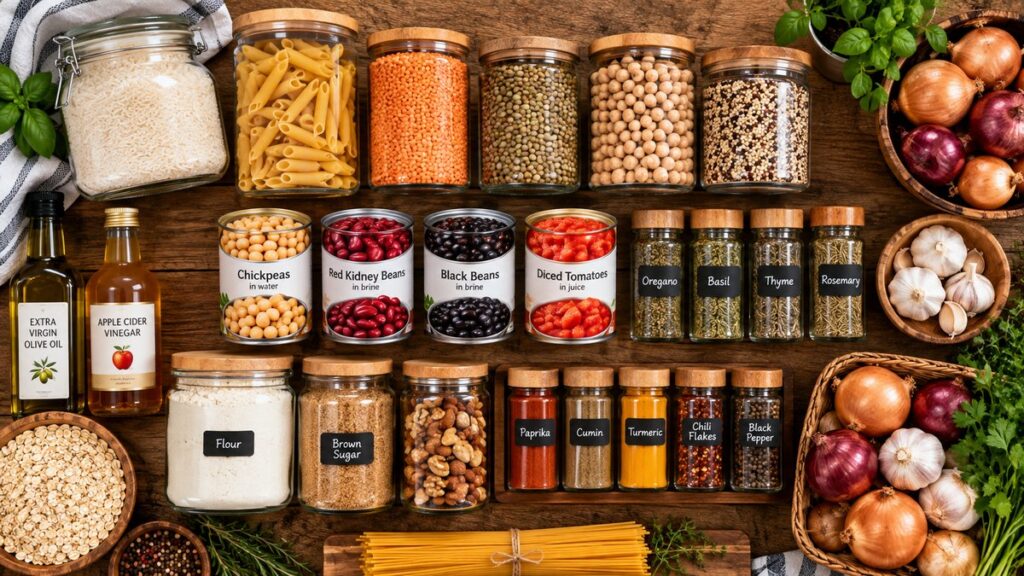
Spices transform simple ingredients, and a short core list covers a wide range of dishes. Start with salt, black pepper, cumin, paprika, turmeric, chilli powder, cinnamon and dried oregano. Add coriander, garam masala, garlic powder or curry powder depending on the foods you enjoy. Buy small amounts and replace them when the aroma fades, usually after a year or so. Whole spices stay fresh longer than ground ones.
What should you keep in the refrigerator and freezer?
- Refrigerator: eggs, milk or plant milk, yogurt, butter, cheese, lemons, onions and garlic (stored cool and dry), carrots and leafy greens.
- Freezer: frozen vegetables, peas, spinach, berries, bread, tortillas, cooked rice and homemade stock.
- Fresh herbs: parsley, coriander and mint add brightness. Store stems in water or wrap in damp paper.
The freezer is an underrated pantry extension. Frozen vegetables are picked and frozen at their peak, they cut prep time and they reduce waste.
How do you build a pantry on a budget?
- Start with what you already use most and note what runs out first.
- Buy one or two extra of a staple when it is on sale, and rotate stock.
- Choose multipurpose items, such as chickpeas, which work in curries, salads and snacks.
- Buy bulk grains, beans and spices where it makes sense, but only if you will use them.
- Add one new ingredient a week as you try recipes.
How should you store pantry items?
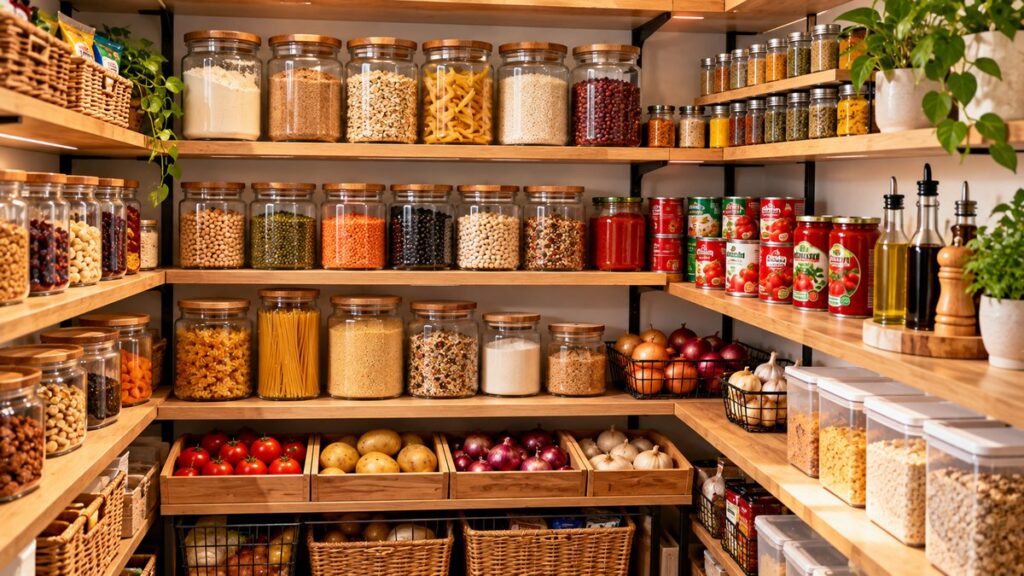
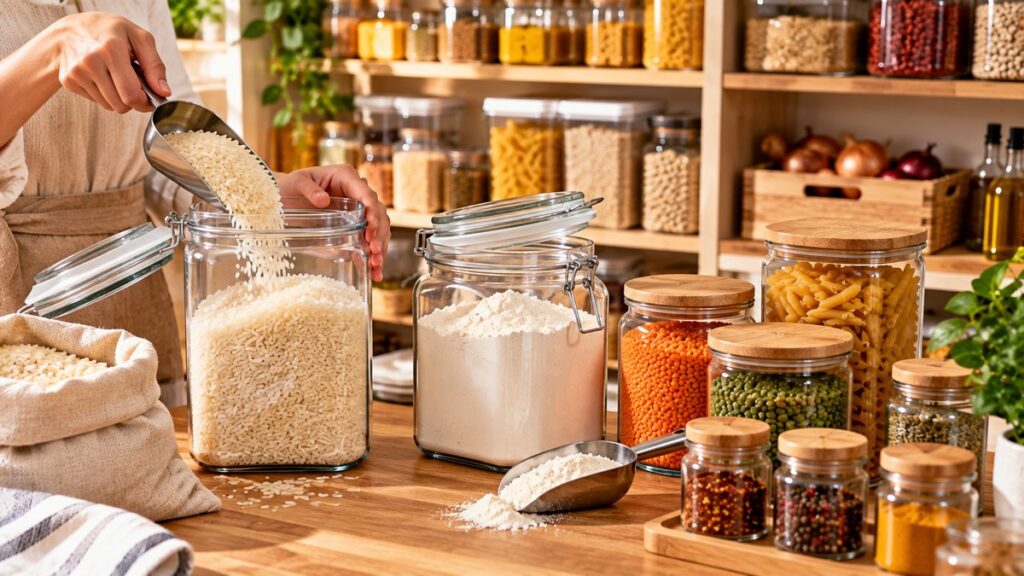
Keep staples in a cool, dry and dark place away from the stove, which heats and degrades food. Transfer flour, sugar, rice and pasta to airtight containers to keep out moisture and pests. Label containers with the purchase date. Store oils away from light and heat, and nuts and whole grain flours in the refrigerator or freezer to prevent them from going rancid. Use the first in, first out approach: new items go to the back, older ones to the front.
Which simple meals can a good pantry make?
- Tomato pasta: pasta, crushed tomatoes, garlic, olive oil and chilli flakes.
- Chickpea curry: canned chickpeas, tomatoes, onion, spices and rice.
- Lentil soup: lentils, onion, carrot, cumin and stock.
- Fried rice: leftover rice, frozen vegetables, eggs and soy sauce.
- Pancakes or flatbreads: flour, baking powder, milk and a pinch of salt.
- Oat breakfast bowls: oats, milk, honey, nuts and fruit.
How can you cut food waste?
Check your pantry before shopping, plan meals around items that need using up, and keep a small shelf for items to use first. Freeze bread, leftover cooked grains and overripe bananas. Learn the difference between best-before and use-by dates: best-before refers to quality, while use-by relates to safety. When in doubt, check smell, appearance and storage conditions, and follow food-safety guidance.
Frequently asked questions
What are the first ten items I should buy?
Good starters are rice, pasta, canned tomatoes, canned chickpeas or beans, oil, salt, pepper, onions, garlic and a basic spice such as cumin or paprika.
How long do pantry staples last?
Dry rice, pasta and lentils often last a year or more when stored well. Flour, nuts and oils are shorter-lived. Check the packaging dates and use your senses.
Do I need to buy expensive ingredients?
No. Everyday staples and a few spices are enough to cook a huge variety of meals.
How do I stop pests in my pantry?
Use airtight containers, wipe up spills promptly and avoid keeping opened packets of flour, rice and grains unsealed.
Bottom line
A good pantry is built slowly and used often. Choose flexible staples, keep a short list of spices, make use of the freezer and store food well. With these basics on hand, an easy dinner is always within reach.